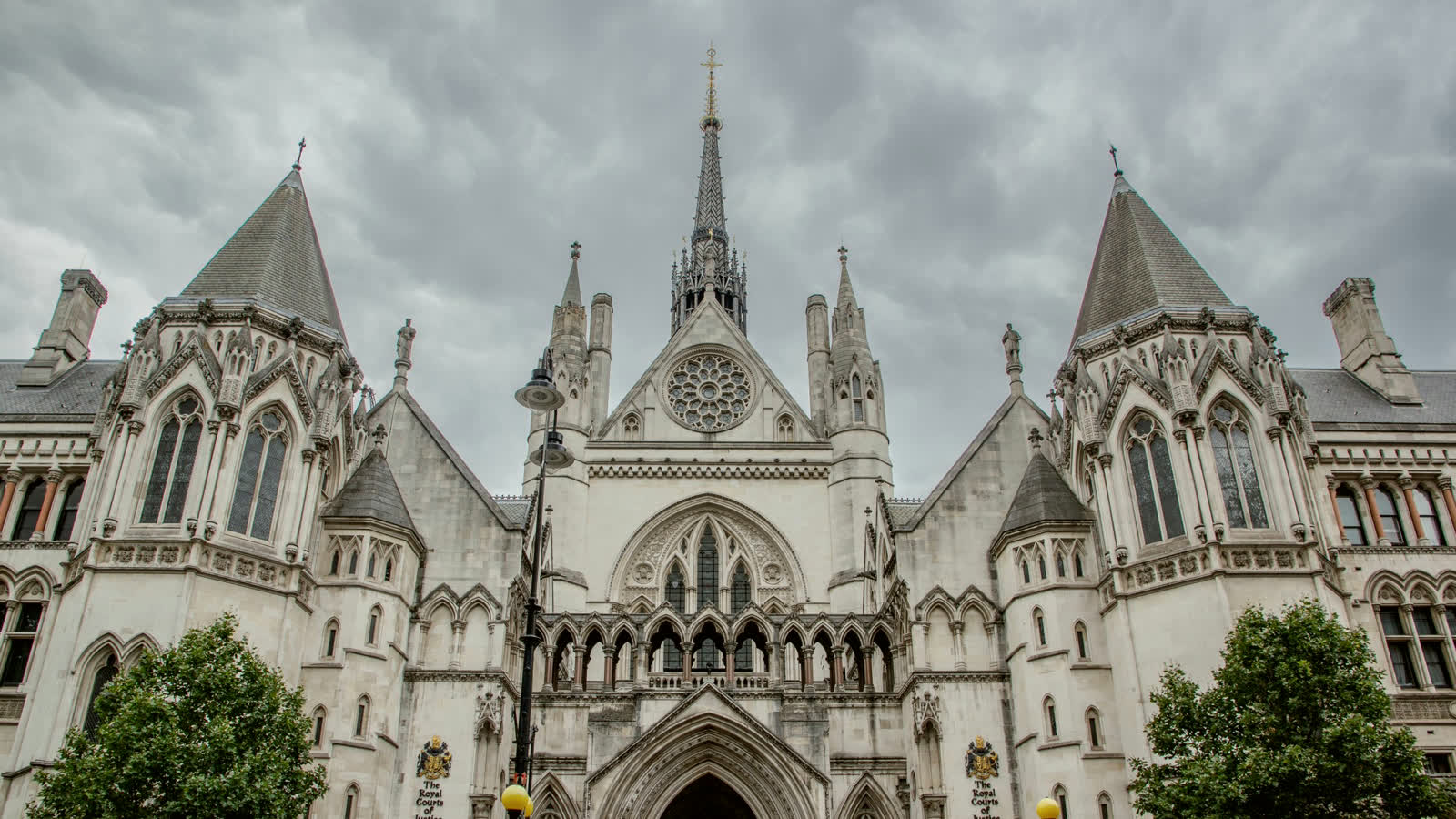
CPR 35.4(3) ties expert permission to the expert named or the field identified, so replacing a named expert, or seeking permission for a new one, needs a court order. The court usually grants it on condition that the earlier expert's report is disclosed (Beck v Ministry of Defence; Hajigeorgiou v Vasiliou). Edwards-Tubb v JD Wetherspoon applies that condition to experts instructed under a pre-action protocol before issue.
Key points
- Permission for expert evidence relates only to the expert named or the field identified, so replacing a named expert needs a fresh order. CPR 35.4(3)
- Where a change needs permission, the court will usually require disclosure of the first expert's report, including drafts that contain the substance of the opinion.
- The condition can apply to an expert instructed for the proceedings under a pre-action protocol before the claim was issued.
- Once the earlier report is disclosed, any party may use it as evidence at trial. CPR 35.11
- A party unhappy with a single joint expert can put written questions, and whether it may obtain or rely on its own expert's evidence is for the court's discretion. CPR 35.6
If you want to replace your expert in a clinical negligence or personal injury claim, the first question is whether changing your expert witness needs the court's permission. Under CPR 35.4(3) permission relates only to the expert named or the field identified in the order. A change of named expert, or a new expert before any permission has been given, needs an order from the court.
The court has a discretion, and it watches for expert shopping: dropping an expert whose opinion is unhelpful and looking for a better one. The usual price of permission is that the earlier expert's report is disclosed to the other side.
When do you need permission to change your expert?
No party may call an expert or put in evidence an expert's report without the court's permission (CPR 35.4(1); see our post on permission for expert evidence).
In Hajigeorgiou v Vasiliou [2005] EWCA Civ 236 the order gave each party permission for one expert "in the specialism of restaurant valuation and profitability". The defendant's switch from one valuer to another needed no permission, because the order identified a field and named nobody (at [16] to [19]). Instructing the first valuer did not by itself use up the permission, because CPR 35.4 controls calling an expert and putting a report in evidence (at [20]).
You will need the court's help where the order names your expert, where no permission has yet been given, or where the new expert needs a step the other side will not agree to. In Beck v Ministry of Defence [2003] EWCA Civ 1043 the order allowed one psychiatrist per party without naming anyone, but the defendant needed an order for a second psychiatric examination of the claimant. As the Court of Appeal later explained in Edwards-Tubb (at [17]), the disclosure condition in Beck was attached to that order.
Do you need the court's permission to change?
What does the order say about your expert?
-
It names them
Changing to someone else needs a further order. Expect disclosure of the first expert's report as the condition. CPR 35.4(3)
-
It identifies a field only
You can switch within the field without a new order (Hajigeorgiou), unless the new expert needs a step the other side will not agree to, such as a further examination (Beck).
-
There is no permission yet
You need permission in any case. If another expert reported after the protocol began, permission will usually be conditional on disclosing that report (Edwards-Tubb).
Why does the court worry about expert shopping?
In Beck the Ministry of Defence had lost confidence in its psychiatrist. His report favoured the defence on liability, but the defendant's solicitor said the report was poorly presented and the psychiatrist lacked knowledge of the Ministry's psychiatric referral system. The Court of Appeal upheld an order allowing a new psychiatrist but added a condition: on taking up the permission, the defendant had to disclose the first report "forthwith" (at [27]).
Simon Brown LJ accepted that a party should not have to criticise its own expert's report in detail while it might still be forced to rely on that expert (at [23]). Ward LJ said that "expert shopping is to be discouraged, and a check against possible abuse is to require disclosure of the abandoned report as a condition to try again" (at [30]). Lord Phillips MR added that a claimant can reasonably object to a second examination if it may be because the first expert's conclusions proved more favourable to him than expected (at [32]).
In Hajigeorgiou the court said: "Expert shopping is undesirable and, wherever possible, the court will use its powers to prevent it" (at [29]). Where a party needs permission to rely on a substitute expert, the condition "will usually be imposed". The court said this does not abrogate privilege. It makes waiver of privilege in the first report the price of permission.
What exactly has to be disclosed?
The condition is not confined to a signed final report. Hajigeorgiou said that it should apply at least to the first expert's report or reports "containing the substance of his or her opinion", and that the judge would have been justified in requiring disclosure of a "draft interim report" (at [30] to [31]).
In BMG (Mansfield) Ltd v Galliford Try Construction Ltd [2013] EWHC 3183 (TCC), Edwards-Stuart J held that there would have to be a very strong case before solicitors' attendance notes recording the expert's views were ordered to be disclosed as well (at [32]), and refused that wider order on the facts (at [38]).
Once a report is disclosed, any party may use it as evidence at the trial (CPR 35.11). In occasional cases the court may require the receiving party to call the expert if it wants to rely on the report (Edwards-Tubb at [32]).
Does the condition apply to an expert instructed before proceedings?
It can. In Edwards-Tubb v JD Wetherspoon plc [2011] EWCA Civ 136 the claimant's protocol letter named three orthopaedic surgeons and the defendant raised no objection. The claimant obtained a report from one of them but relied on a report from a different surgeon. The Court of Appeal restored an order making permission to rely on the second surgeon conditional on disclosure of the first report.
Hughes LJ saw no difference in principle between changing an expert instructed for the purpose of proceedings before issue and changing one after issue (at [27]). The power is discretionary, but it "should usually be exercised" where the change comes after the parties have embarked on the protocol (at [31]). Where a party takes advice before the protocol stage at its own expense, the same justification for the condition does not exist, at least without some unusual factor. An expert consulted then and not instructed to write a report for the court is outside CPR 35.2 (at [31]).
Edwards-Tubb arose under the personal injury protocol. The Pre-Action Protocol for the Resolution of Clinical Disputes does not ask the claimant to put forward named experts for comment. It asks the parties to co-operate on medical specialisms, joint instruction and whether pre-action reports might be shared (para 4.2), and says pre-action reports may be used in proceedings only with the court's express permission (para 4.4). The letter of claim should give the discipline of any expert whose evidence has been obtained (para 3.16(e)). Edwards-Tubb did not decide how its test applies under that protocol, so expect close scrutiny of when, and why, the first expert was instructed.
What counts as a good reason to change?
Reasons unconnected with the content of the opinion are the easiest to explain: the expert retires or withdraws, falls ill, has a conflict, or lacks expertise in an issue that has emerged. In BMG the claimants' expert architect, who had retired from full-time practice, said after a failed mediation that he no longer wished to act. Edwards-Stuart J saw nothing unreasonable in that on the face of it, and said that "on one view" this was not expert shopping at all (at [15] and [35]). He gave permission for the new expert (at [68]), while still ordering disclosure of any other report or document in which the first expert had expressed opinions on the issues (at [39]).
Where the first report is simply unfavourable, Hughes LJ said that expert is not necessarily correct, and a party should not usually be forced to rely on an expert in whom it has lost confidence (Edwards-Tubb at [30]). The court's answer is disclosure. A good reason helps you obtain permission and may limit how far disclosure goes. It does not of itself remove the condition.
Can you instruct your own expert if you disagree with a single joint expert?
Sometimes. In Daniels v Walker [2000] EWCA Civ 508, [2000] 1 WLR 1382, the defendant disputed a jointly instructed occupational therapist's care recommendations, on which a substantial sum depended. Lord Woolf MR held that agreeing to a joint report does not prevent a party from being allowed to obtain, or if appropriate rely on, another expert's evidence (at [27]). In a substantial case, a party with reasons "which are not fanciful" should, subject to the court's discretion, be allowed to obtain further evidence before deciding whether to challenge the report (at [28]). In a modest claim the court may allow no more than a question to the joint expert (at [29]).
Lord Woolf said the court should not usually be asked straight away to let the dissatisfied party call a second expert (at [29]). The next step is written questions (CPR 35.6; see our guide to written questions to experts) or the party's own report. If questions do not resolve the point, the experts should meet before any decision on oral evidence, which is a last resort (at [31]).
What should the application and evidence say?
The application notice must state the order sought and, briefly, why (CPR 23.6). The supporting witness statement should cover:
- when and why the first expert was instructed (preliminary advice or a report for the court), and what they produced, including drafts;
- the reason for the change, with evidence such as the expert's own letter;
- the new expert's name, field, issues, CV and costs estimate, as CPR 35.4(2) requires;
- the effect on the timetable, and whether a further examination of the claimant is needed;
- your position on disclosure of the earlier report.
Hughes LJ suggested it may be better practice for an order to name the expert (Edwards-Tubb at [27]), so the draft order should name the new one.
How can instructing solicitors reduce the risk of a change?
Use Which specialty? to match clinical issues to disciplines before you instruct, and send an enquiry through find an expert if you need a name. Before instructing, ask about availability through to trial and plans to retire, and check for links with the clinicians whose care is in issue.
State in the letter of instruction whether you want preliminary advice or a report for use in proceedings, because Edwards-Tubb draws a line there. Keep a dated note of any reason for a change when it arises. Advise the client early that a change of expert will usually mean disclosing the first report.
Template: Letter of instruction: clinical negligence (breach and causation)
Word · 6 pagesFree to download, no sign-up.
Download the templateFrequently asked questions
Do I need the court's permission to change my expert witness?
Usually, if the court's order names your expert or no permission has yet been given. CPR 35.4(3) ties permission to the expert named or the field identified. Where an order gives permission for one expert in a field without naming anyone, the Court of Appeal held in Hajigeorgiou v Vasiliou that a party could switch experts within that field without a fresh order. A further examination of the claimant by the new expert still needs agreement or an order.
What is expert shopping?
Expert shopping means dropping an expert whose opinion is unhelpful and looking for another who will say something better. The courts discourage it. In Beck v Ministry of Defence the Court of Appeal allowed a defendant to replace its psychiatrist only on condition that the first report was disclosed, and in Hajigeorgiou v Vasiliou it said the court will use its powers to prevent expert shopping wherever possible.
Will I have to disclose my first expert's report if I change experts?
Usually, if you need the court's permission for the change. The court can make permission conditional on waiving privilege in the earlier report, and Hajigeorgiou v Vasiliou says that condition will usually be imposed. It covers at least any report containing the substance of the first expert's opinion, including drafts. Once disclosed, any party may use the report as evidence at trial under CPR 35.11.
Can I change expert if my expert retires or falls ill?
Yes, the court can give permission, and a reason unconnected with the content of the opinion is easier to justify. In BMG (Mansfield) Ltd v Galliford Try Construction Ltd the first expert, who had retired from full-time practice, wished to withdraw, and the court gave permission for a new expert. It refused disclosure of solicitors' attendance notes but still ordered disclosure of any other report or document from the first expert expressing opinions on the issues.
Can I get my own expert if I disagree with the single joint expert?
Possibly. In Daniels v Walker the Court of Appeal held that agreeing to a joint expert does not stop a party obtaining its own evidence where it has reasons that are not fanciful, subject to the court's discretion. The court should not usually be asked straight away to let a dissatisfied party call a second expert: written questions under CPR 35.6 or the party's own report come next. In a modest claim the court may allow no more than a question.
Does the disclosure condition apply to a report obtained before proceedings were issued?
It can. In Edwards-Tubb v JD Wetherspoon plc the Court of Appeal saw no difference in principle between experts instructed for the proceedings before and after issue. It held that the condition should usually be imposed where the change comes after the parties have embarked on the pre-action protocol. Private advice taken before the protocol stage, from an expert not asked to report for the court, is treated differently.
Sources
- CPR Part 35, rules 35.2, 35.4, 35.6 and 35.11
- CPR Part 23, rule 23.6
- Pre-Action Protocol for the Resolution of Clinical Disputes, paras 3.16 and 4.1 to 4.4
- Beck v Ministry of Defence [2003] EWCA Civ 1043
- Hajigeorgiou v Vasiliou [2005] EWCA Civ 236
- Edwards-Tubb v JD Wetherspoon plc [2011] EWCA Civ 136
- BMG (Mansfield) Ltd v Galliford Try Construction Ltd [2013] EWHC 3183 (TCC)
- Daniels v Walker [2000] EWCA Civ 508
Need a medical expert for a case?
Send the specialty and a short outline. A coordinator will reply within one working day.